How to choose a defibrillator (AED): practical buying guide
How to choose an automatic external defibrillator (AED) for a company, institution or public space: criteria, maintenance and FAQs according to ERC 2025.
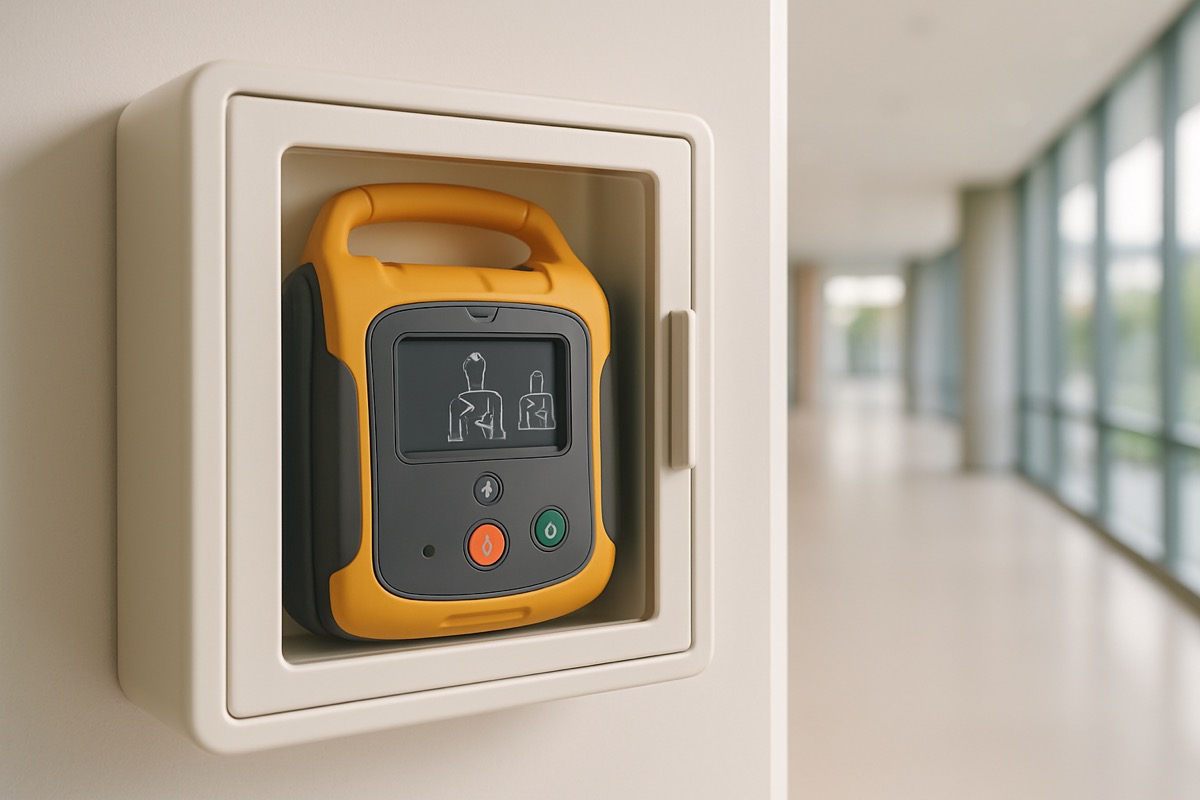
Sudden cardiac arrest occurs unexpectedly – often in the workplace or public space, far from medical assistance. In such cases automatic external defibrillator (AED) together with timely resuscitation is one of the most realistic chances to save a life even before the ambulance arrives. In this guide, we explain how to choose the right defibrillator for a company, institution, or public space.
What an AED is and how it works
An automated external defibrillator (AED defibrillator) is a device that automatically analyses the heart rhythm and, if a shockable (life-threatening) rhythm is detected, delivers an electric shock. The shock can terminate a dangerous arrhythmia and create conditions for the restoration of an effective heart rhythm. AED discharge allowed only when needed, and each action is indicated verbally, so it can be used even by someone without medical training.
Time is critical here: in the event of sudden cardiac arrest, every minute without defibrillation reduces the chance of successful resuscitation by about 10%. According to the European Resuscitation Council (ERC 2025) recommendations, early defibrillation is one of the most important links in the survival chain.
Semi-automatic or automatic defibrillator?
- Semi-automatic AED – after assessing the rhythm, it instructs to press the discharge button. The user maintains control over when discharge is allowed.
- Automatic AED – having determined that a discharge is necessary, the device performs it itself, warning in advance not to touch the victim.
Both types are equally safe and designed for use by individuals without medical training. The automatic model eliminates the need to press the discharge button, making it even simpler for some users, while the semi-automatic provides more control. The choice often depends on who will be using the device.
Where will you use it? The model depends on that
- Public access (shopping centres, schools, sports clubs) – choose bright, durable. public access AED model, often with wall cabinet and clear marking.
- Company or office – the defibrillator for a company or office must be easy to use, with clear instructions and convenient maintenance.
- Healthcare institutions and doctors' offices – choose a model that meets the needs of the institution, with a clear self-monitoring system and easily accessible consumables (electrodes, batteries).
- Outdoor or mobile use – pay attention to dust and moisture resistance (IP class).
What to pay attention to when choosing: main criteria
- Voice prompts in a language you understand – to make it clear what to do in a critical moment.
- Visual instructions – some models supplement voice instructions with a screen or icons that further clarify each action.
- Suitability for children – child electrodes or child mode. According to ERC, if child electrodes are not available, adult ones can be used.
- Protection rating (IP class) – important in public or outdoor spaces.
- Electrode and battery expiry and replacement cost – this determines the true long-term cost, not only the purchase price.
- Status indicator (self-check) – the device regularly self-checks and indicates whether it is ready for use.
- Warranty and support – especially for companies and public access.
- What's included – cabinet, bag, spare electrodes.
You can view the available models In the Defibrillators category – the purpose, composition and current price are indicated for each product.
What to pay attention to when comparing manufacturers
It is not necessary to compare specific models, but when choosing between different manufacturers, it is worth considering:
- ease of use (voice and visual prompts);
- the price of electrodes and availability;
- battery service life;
- warranty;
- technical service options in Lithuania.
These criteria determine not only comfort but also long-term operating costs – so they are worth considering before purchasing.
How much a defibrillator costs
The price of an AED depends on the model, type (semi-automatic or automatic), and configuration. When choosing, it is worth considering not only the purchase price but also running costs – replacement of electrodes and batteries according to the expiry date. Current prices can be found next to each product.
AED maintenance: to ensure it works when needed
- Check regularly status indicator.
- Replace on time electrodes and battery by the expiry date.
- Keep the device in an easily accessible, marked location.
Is training required?
The AED is designed for anyone to use – the device guides you through every step. However previously acquired skills in cardiopulmonary resuscitation (CPR) and AED use helps to act calmer and faster, with the best results achieved by combining CPR and AED. Training will benefit training defibrillators and resuscitation mannequins.
Frequently asked questions
Can an AED be used by a person without medical training?
Yes. The device verbally indicates each action, assesses the heart rhythm itself, and allows discharge only when necessary.
Can a defibrillator be used on children?
Yes – using child electrodes or child mode. If they are not available, adult electrodes can be used according to ERC.
Where should an AED be placed?
In an easily accessible, clearly marked location – the closer to people, the quicker it can be used.
How often to change electrodes and battery?
According to the manufacturer's specified expiration date; the status indicator helps to notice in time when it needs to be replaced.
Sources: European Resuscitation Council (ERC), 2025 resuscitation guidelines – cprguidelines.eu.
{„@context”: „https://schema.org”, „@type”: „FAQPage”, „mainEntity”: [{„@type”: „Question”, „name”: „Ar AED gali naudoti žmogus be medicininio išsilavinimo?”, „acceptedAnswer”: {„@type”: „Answer”, „text”: „Taip. Prietaisas balsu nurodo kiekvieną veiksmą, pats įvertina širdies ritmą ir iškrovą leidžia tik esant reikalui.”}}, {„@type”: „Question”, „name”: „Ar defibriliatorių galima naudoti vaikams?”, „acceptedAnswer”: {„@type”: „Answer”, „text”: „Taip – naudojant vaikų elektrodus arba vaikų režimą. Jei jų nėra, pagal ERC galima naudoti suaugusiųjų elektrodus.”}}, {„@type”: „Question”, „name”: „Kur turėtų būti AED?”, „acceptedAnswer”: {„@type”: „Answer”, „text”: „Lengvai pasiekiamoje, aiškiai pažymėtoje vietoje – kuo arčiau žmonių, tuo greičiau jį galima panaudoti.”}}, {„@type”: „Question”, „name”: „Kaip dažnai keisti elektrodus ir bateriją?”, „acceptedAnswer”: {„@type”: „Answer”, „text”: „Pagal gamintojo nurodytą galiojimo terminą; būsenos indikatorius padeda laiku pastebėti, kada reikia keisti.”}}]}